


Spinbetter Women's cricket: a market that can no longer be ignored
If we put aside stereotypes, women’s cricket is no longer a ‘social project’ or an attempt to replicate the men’s model. It is an independent product with its own dynamics, its own audience and, most importantly for the market, its own odds logic. And this logic is now much more interesting than it might seem at first glance.
The rules are identical: 11 vs. 11, bat, ball, two innings or a limited number of overs. The formats are the same — Tests, ODI (50 overs) and T20 (20 overs). But the pattern of play is different. There is less power improvisation and more consistency. Teams build their innings more carefully, bowlers work more often according to plan rather than on emotion. Because of this, the matches are easier to follow — especially if you watch them regularly, rather than just looking at the statistics in the app.
Formats
| Format | What is important to understand | For betting |
|---|---|---|
| Test | Uncommon format, high importance of discipline and weather | Draws and long scenarios are interesting |
| ODI | Strategic game with acceleration phases | Convenient for analysing totals |
| T20 | Maximum event density | Best format for live events |
Today, T20 is the driving force behind women’s cricket. It is what draws audiences and shapes leagues. However, from an analytical perspective, ODI is often even more interesting: the distance is longer, there is less randomness, and the teams’ behaviour patterns are more stable. Therefore, it is one of the most profitable formats for betting on the Spinbetter website.
Why women's cricket has gained popularity
This growth is no accident. Several factors coincided at the same time:
- World championships began to fill stadiums and attract serious television ratings.
- The Women’s Premier League appeared in India, with big contracts and attention from global brands.
- The Australian WBBL has become a fully-fledged commercial product.
- The media has stopped treating tournaments as secondary content.
As a result, the market expanded, but did not become overheated. And this is the key point. When a sport is popular but has not yet been picked apart by professional bettors, imbalances appear in the betting lines. This is especially true for matches outside the top four teams.
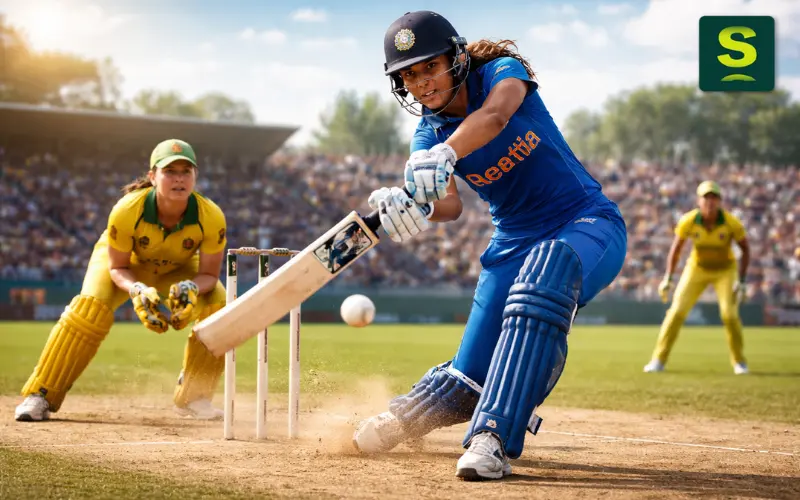
What makes women's cricket interesting for betting
To put it bluntly, without romanticising:
- The game model is more stable. There are fewer chaotic ‘comebacks from nowhere’.
- The gap between teams is narrowing, but the odds often reflect old perceptions.
- The line is less detailed than in men’s cricket — the margin is sometimes lower in secondary markets.
- Dependence on coverage is more pronounced. In India, spin is decisive, in Australia — pace and bounce.
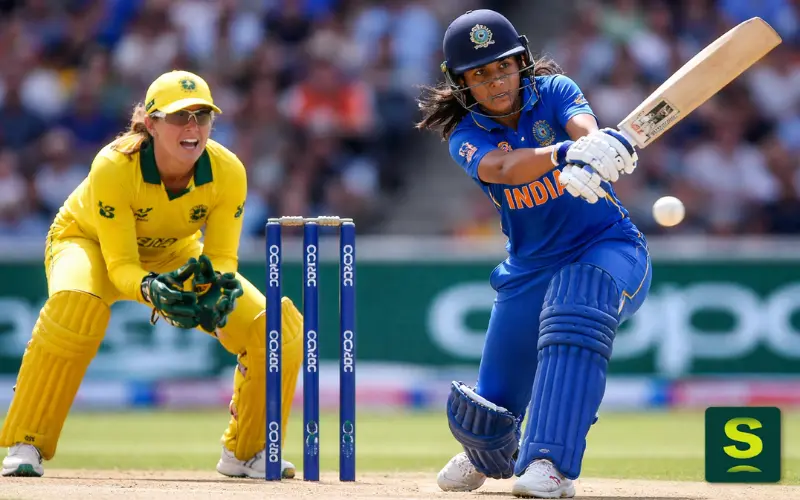
Women’s cricket is better analysed through structure rather than highlights. If a team consistently wins the powerplay and maintains control over bowler economy, this is almost always reflected in the distance.
Conclusion
Spinbetter Women’s cricket is currently a growing market that is not yet fully established. It is already professional enough to provide quality statistics, yet not as overloaded with analytics as the men’s segment.
For spectators, it is a structured, tactically balanced game.
For bettors, it is an opportunity to work where the line is not yet perfect.
But, as in any sport, it is not the format that matters, but discipline. Without it, even the most promising market turns into a lottery.
FAQ
Are the rules of women's cricket different from men's?
No, the rules are identical. The pace and style of play are different.
Which format is best for betting?
T20 is the most convenient for beginners due to the dynamics and frequency of matches.
Are there any major professional leagues?
Yes, the WPL in India and the WBBL in Australia are key examples.